Saturday, 28 January 2012

Could this be the next flying challenge?

2-seat weight-shift microlight at Arclid

This afternoon I visited the microlight field at Arclid, near Sandbach, Cheshire to gather information on the sport of flying these airborne motorcycles. I recently sold my share in my beloved dH Chipmunk mainly because of the lack of freedom and increasing hassles of operating a conventional aeroplane out of of a major international airport.

These weight-shift controlled microlight aircraft, operating out of an uncontrolled field in rural Cheshire, might be a way back into the sort of grass-roots flying we used to enjoy at Barton in the Chipmunk in the 1970s through to the 1990s.

The clubhouse and hangar at Arclid

There are many things to consider before deciding whether to pursue this activity. Although my pilot's licence makes it entirely legal for me to climb into one of these machines and fly it, in practice they are sufficiently different to fly to require extensive conversion training. The 'bar' on the microlight which is the equivalent to the 'stick' in an aeroplane works in the opposite sense to a stick, the 'rudder pedals' don't work a rudder but merely steer the nosewheel (in the opposite sense a rudder on a conventional aeroplane steers it on the ground), and the throttle is worked with the foot rather than by hand as it is in an aeroplane.

The duty instructor at Arclid reckons it takes around ten hours of training to convert a conventionally-trained and experienced pilot like me to fly the weight-shift machines. Then there's ownership - light aircraft tend to be owned by several people who share the costs; it's conventional with microlights to own one outright. And, of course, one needs somewhere to hangar it!

Having stated all the above, perhaps my ideal next aviation move is a backwards one, a Piper Cub on a local farm strip. I had a great deal of fun a couple of decades ago flying a 1944 L4 Cub out of Barton; it would be great to recapture those times... But finding such an opportunity will not be easy.

Me and the L4 in the late '80s at Barton


 A microlight approaches the runway to land at Arclid

Food for thought!


.

Wednesday, 25 January 2012

Bus-pass walk

One advantage of being an old git is the free bus pass. I decided to use this today to do a linear walk using our local 'Connect 88' bus which runs from Altrincham to Knutsford via Wilmslow, and stops at the end of our road at Davenport Green. This morning I caught the bus from there to Oversley Ford, where the Altrincham road crosses the river Bollin.

From opposite the former Valley Lodge Hotel (now a Holiday Inn) I followed the path that crosses the fields and parallels the river. The pictures in this post were taken with my 'phone, so I apologise for their low quality. However, as usual they can be enlarged by clicking on them.

Some minor side valleys, or 'cloughs' in the Cheshire idiom run into the Bollin and the path crosses these on wooden bridges

Looking back towards my start point, in the valley beyond the trees

 River Bollin, and the path running southwards

 My route climbed up out of the Bollin Valley as the river swung west towards the tunnel constructed under the new runway at Manchester Airport. This is Bollin House Farm.

Just past Bollin House Farm the path emerges on a bank overlooking the Airport at the Mobberley end of runway 23L / 05R. If you click on this picture to enlarge it you can see the terminal buildings on the horizon, and to the left of those, the Emirates A380 Super Jumbo which has just landed.

Now south of the Airport, looking north in Mobberley
.
 Looking north from Valewood Farm

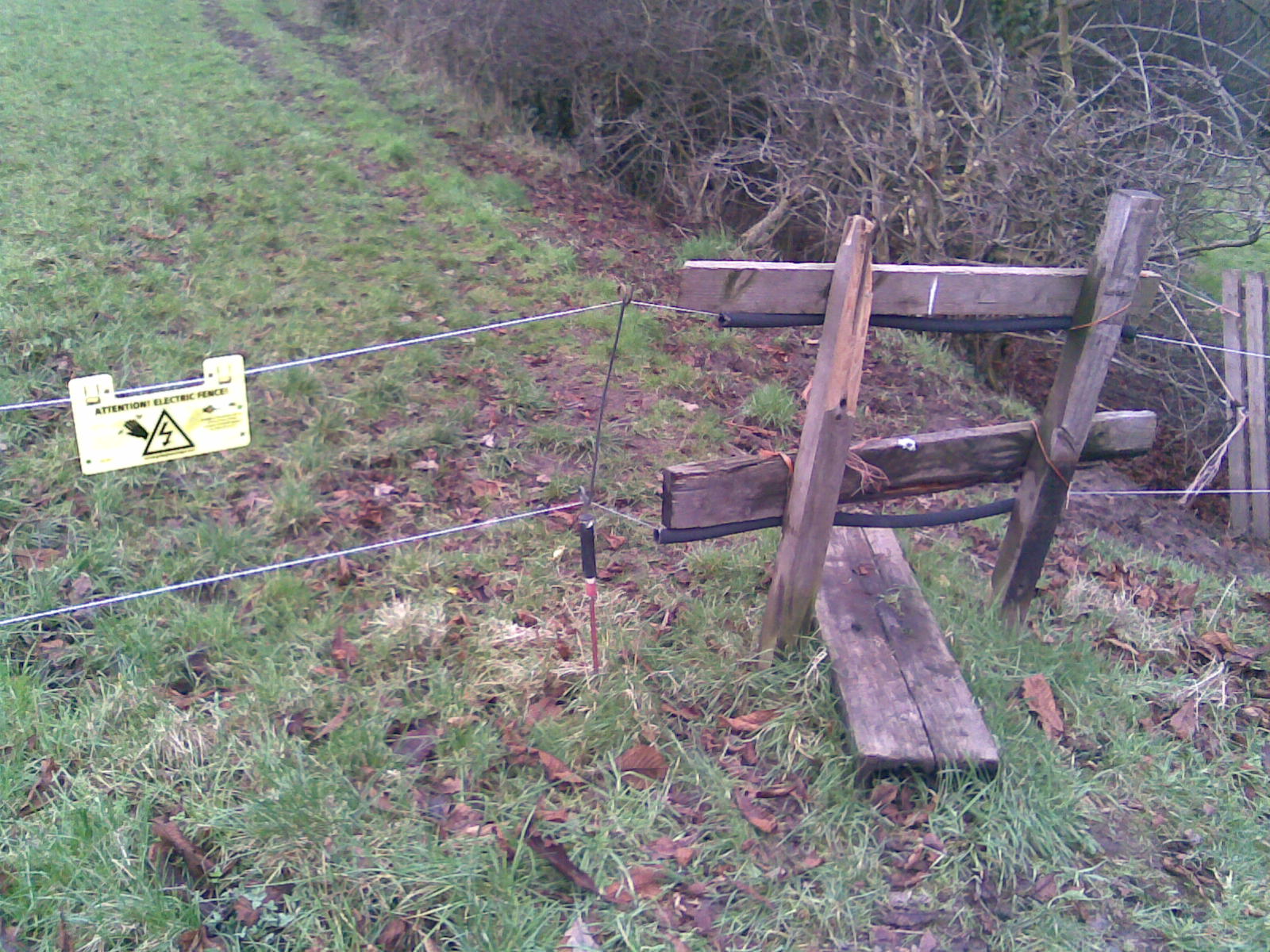
A temporary stile over an electric fence, near Wee Bridge Farm. I paused for lunch near here.
.
 The path crosses the Mid Cheshire railway line south of Mobberley station. It will be re-crossed later between Mobberley and Shaw Heath.

The path here forms part of the North Cheshire Way. Broad Oak Farm in the background.
.
 Witchcote Wood, in Tatton Park beyond the boundary fence. Unfortunately there is no path into the park from this Mobberley side.
.
 Near the finish at Shaw Heath; looking back to Witchcote Wood
.
From here I continued to the B5085 just north of Knutsford and enjoyed some coffee from my flask in occasional weak January sunshine as I awaited the 'Connect 88' bus to run me back to Davenport Green. It had only been about five and a half miles, and very muddy in parts (as ever with Mobberley in winter!), but it had been a most enjoyable day out.


Update 1st February

I repeated the walk today in lovely winter sunshine and extended it into Knutsford. Far less mud as it was frozen! I caught the 'Connect 88' back to home from Knutsford bus station.

A brighter day than last week. The Emirates A380 super jumbo about to touch down on runway 05L.


Among the approach lights for runway 05R in Mobberley I found this ex-heron. It can't have been there long as the scavengers had yet to discover it and in this remote location they'd had plenty of undisturbed opportunity. Manchester Airport was using this runway this morning until about 09:30 for landings, and the adjacent 05L was in use at the time of my walk for landings and take offs. I wonder if the heron was the victim of vortex wake? It appears to have impacted the ground violently and in one piece (if it had been in collision with an aeroplane, I'd have expected severe injuries).

Winter sunshine near Shaw Heath, Tatton Park on the other side of the hedge


The end of today's walk; St John's parish church, Knutsford
.


.

Friday, 13 January 2012

Last ever flight in command of dH Chipmunk G-BCSL?

It's always been a tad inconvenient to have to drive to Liverpool to fly our group-owned dH Chipmunk, and with the latest security measures in place at the airport since last year the 'hassle factor' has gone up considerably. It's the usual 'big airport' stuff - security fences with camera-controlled electronic gates making ingress and egress hard work and time consuming (don't even think of forgetting something and having to go back to your car for it). Ensuring the aeroplane gets fuelled despite phone calls the previous day... And for me there is the added problem of the distance to Liverpool and trying to judge if the weather is going to make the journey worthwhile. There have been many pointless journeys. And of course when you get there you can't just 'go up and have a look' at the conditions, landing back if not OK or flying off on a jolly if it looks good.

I feel the need to operate out of a more easygoing location, preferably a bit closer to home.And of course the dramatic rise in the price of Avgas aviation fuel (up to £2 a litre and set only to rise), the upward trend all other flying costs, and the ever more expensive car fuel to Liverpool and back are increasing the cost of flying. Put the two together - increased hassle and increased cost - and there comes a time when the game ain't worth the candle.

I've been contemplating selling my share for a while now, but it's not a good time to do so. Those factors that are putting me off are also putting off a lot of potential share purchasers, and of course there is less money around at the moment for people to spend on expensive leisure pursuits. Several shares in the aeroplane have been on the market for some time now with no takers.

Last month, out of the blue, I received an e-mail asking if my share was for sale (I must have mentioned on an Internet message board that I was thinking of selling). So I thought "well if I am going to sell, here's an ideal opportunity". And I decided to go ahead. The share transfer was handled by our group secretary, Debbie, so I filled in the forms and sent them to her, and just after Christmas I received a cheque from her for the full value of the share. Unfortunately, the weather in December at the times I could fly was awful, but Debbie said "don't worry. I'll keep you on the insurance until you've had your last flight in her". Today was that last flight... saying goodbye to an aeroplane I've been flying since I got my licence in 1978.

Click on any picture to enlarge it.

 
Sierra Lima being readied for flight at Liverpool John Lennon airport this morning

I departed off runway 27 with no delay intending to visit Sleap. The local weather was quite excellent, but south of the Peckforton hills, and to the east of the Manchester Low Level Route, the ground was hidden by a dazzling white layer; fog! So Sleap was not a viable destination; even if it was clear there, it would be foolish to fly there above the fog layer as a successful forced landing in the event of engine failure would not be possible.


Overhead Chester, outbound from Liverpool John Lennon. The Peckforton hills are off the wing tip, while the Mersey and the steam plume from Fiddler's Ferry power station are visible,


I flew over to the edge of the fog layer and watched a narrow boat on the Shropshire Union Canal glide from sunshine into murk as it entered the fog. I turned north up the Low Level Route enjoying the views of mid Cheshire, including the swing bridge over the River Weaver at Acton Bridge, where we attended a traction engine rally on 2nd October last (see this blog for a description).


Acton Bridge on the River Weaver

Just north of the M56 motorway I located Fox Covert cemetery where we buried my sister a week ago. I slid the canopy back to get a perspex-free series of photographs as I circled overhead.


Fox Covert Cemetery, Stockton Heath, in front of the wing. One week ago we buried my sister Elaine here. Her grave is in the newly-dug area of sandy soil furthest from the camera near the cemetery boundary hedge.


Looking south from Stockton Heath, low fog over Cheshire visible in the distance

The Sierra Lima Chipmunk Group started at Barton airfield in 1979, and I was a founder member. I learnt to fly at Barton in 1978 / 79 and until a few years ago, when it ceased to be run by Lancashire Aero Club but was sold by Manchester City Council to property developers Peel Holdings, it was our playground. A fabulous place to fly from - free of petty restrictions and with a lively social side. As Joni Mitchell sang "you don't know what you got 'till it's gone". But Peel notwithstanding, a visit to Barton just had to be included in this last flight.

I called them up on the radio requesting 'a low approach and go-around not below five hundred feet'. Barton Information (the radio call sign of Manchester City Airport, Barton) readily agreed, so I joined overhead to perform my hallmark 'wings vertical without pulling back' rapid descent to circuit height on the dead side, tracked across the airfield to the downwind leg, and, checking I had plenty of speed, rolled into a steep turn (bank and yank - a Chippy forte!) onto the downwind leg. I kept it fairly tight, no flap, and quite fast for the run along runway 27 Left and climbed away on track for Liverpool.


Overhead Sierra Lima's spiritual home, Barton Airfield. I had to bring her back here on our last flight, our one time playground for twenty five years, even if it is no longer Barton as we knew it.


Fiddler's Ferry plume again - from the other side this time as we return to Liverpool for our last landing

I thanked Barton and switched to Liverpool Approach to request a Zone Join at Burtonwood, which was granted "not above 1,500 feet QNH". On reaching Burtonwood I was cleared to continue along the M62 and report approaching Tarbuck Interchange. From there, and having confirmed to the controller that I had the field in sight, he asked me to call Liverpool Tower. On the way into the zone I'd heard a couple of Easy Jets and a Ryanair call and request visual approaches, so was expecting to be held for them to land.

"Liverpool Tower, Golf Bravo Charlie Sierra Lima, Tarbuck, Field in sight"

"Sierra Lima Liverpool Tower, position to right base, number three at present so expect to hold"

"Wilco, Sierra Lima"

"Sierra Lima I'm going to try to get you in before an Easy Jet on a visual left base. If it doesn't work out I'll have to send you around"

"Roger, I'll keep it tight, Sierra Lima". By now the first Easy Jet was also on the Tower frequency, positioning left base.

I flew in a high speed descent almost down the eastern boundary of the airfield with the power back to idle, levelled off at about 100 feet and let the speed bleed back. Flaps 'one' selected as it passed 90 knot, flaps 'two' as the needle fell through 75 and I started the descending turn onto a very short final.

"Turning final, Sierra Lima". The 'numbers' at the end of 27 flashed beneath.

"Sierra Lima cleared to land runway 27, surface wind 010 degrees 4 knots"

"Clear land, Sierra Lima"

"Liverpool Tower Easy 308 final, 27"

"Easy 308 continue"

"Continue, 308"

I touched down 3-point (the last landing HAS to be greaser!) and braked gently to a halt abeam taxyway Foxtrot.

"Sierra Lima vacate at Foxtrot, continue to Kilo" (the GA apron).

"Right at Fox, then to Kilo, Sierra Lima"

As I turned off the runway I slid the canopy back. The prop blast ruffled my hair and glancing right the A320 was roaring down short final.

"Easy 308 expect late landing clearance, Chipmunk to clear"

"308"

"Easy 308 cleared to land runway 27, surface wind 015, 3 knots"

"Clear land, Easy 308"

Air traffic at Liverpool can be good. Today, on this last landing of this last flight, they have been very good.

"Sierra Lima; Kilo. Thanks for getting me in quickly there"

"Sierra Lima, thanks for your help!"

Nice note to go out on with Liverpool ATC.


Easy 308 which was number two to us about to touch down on runway 27 at Liverpool as we taxi to the GA apron having just vacated that runway at Foxtrot


After the flight; me in Sierra Lima's cockpit.... for the last time?


This I won't miss; cleaning the oil from on, in, under, and around the front end of the aeroplane after flight

Whither now? I'd love to keep flying and will one way or another. I have a standing invitation to come back to the lovely Sierra Lima any time, but of course no longer being a group member I'll have to fly her with Keith, the chairman and always up for a flight, in the back seat.

My ideal would be a Piper L4 Cub on a farm strip in Cheshire. Maximum fun minimum hassle flying!


.


Here's a comment I appreciate, from a retired Liverpool controller, that sort of completes the circle:

Vince, sorry to hear you no longer fly Sierra Lima. I retired from Liverpool ATC nearly two years ago and it was always a pleasure to work with you. Juggling GA and A319s / 737s was a bit of a nightmare at times but I always knew that if I asked you to keep it tight ahead of a big one you would, and more!

Best wishes and happy flying.

Dave Smith

(Long ago Cessna 150 driver, so I had some idea of what it was all about!)


Friday, 6 January 2012

Not the best way to end the old year..... or start the new.

My lovely sister, Elaine, three years younger than me, has been unwell for a long time. She died about mid day on Christmas day, and today... we buried her. Requiem mass at St Monica's Catholic Church in Stockton Heath, interment at Fox Covert cemetery, and a wake at the nearby Park Royal hotel.

One week later, Fox Covert Cemetery in front of the wing of our Chipmunk as I fly over. Elaine's grave is in the newly-dug area of sandy soil near the boundary hedge furthest from the camera.


After landing I drove to the cemetery to see the grave. It looks bleak now, but when the gravestone and landscaping are complete it will be a place worthy of Elaine's memory.

.

Saturday, 26 November 2011


Unusually I was not rostered on any Concorde tours this weekend, so I took the opportunity to travel down to the National Exhibition Centre at Birmingham International intending to visit 'The Flying Show' in Hall 12 and 'Motorcycle Live' in Hall 2.

A Virgin West Coast Pendelino took me from Wilmslow to Crewe, a London Midland 350 electric multiple unit conveyed me onwards to Birmingham New Street, and a second one took me on to Birmingham International arriving about 10:15. From the station it's fair walk to Hall 12 but hey, the exercise would do me good.

Pendelino 'Virgin Harrier' on reaching Crewe at 08:27 this morning

First point of call was the 'Flyer Magazine' stand to pick up my 'Flyer Forum' (a lively aviation internet forum hosted by the magazine) lanyard followed by a quick look around the hall before settling into the seminar area for a talk by Flyer's publisher, Ian Seager, on using the iPad for aviation purposes. Not something I'll be doing in the limited confines of the Chipmunk's cockpit!

After the seminar, I went over to the model flying area to admire a turbine powered model helicopter. With a characteristic rising whine the turbine span up to speed, the engine ignited with a 'whoof' and momentary splutter of blue flame from the tailpipe, and settled to a fast idle. after several seconds the engine was run up with an increasingly high pitch whine and the main and tail rotors began to rotate until full rotor RPM was achieved and the craft rose into the air. Very impressive. 

The British Gliding Association had a glider simulator (full size cockpit, with a projected landscape out in front). "Will it do aeros?" I asked the 'instructor' who was sitting in the cockpit's rear seat. "Climb in and find out", he responded.

So I got into the front seat, donned the headset so i could talk to the back seater, who positioned us in a 40 knot cruise about 1,500 ft above the floor of an alpine valley with an airfield below us. I lowered the nose for 120 knts, eased back the stick, and the glider looped very nicely, the Alpine scenery disappearing below the nose to be replaced by sky, then reappearing from above. Using the exit energy from the loop I waited for about 30 degrees nose-up, and then and rolled it; "I don't think it'll roll" came the voice in the headset. But it did, and surprisingly well, too. We were below the sides of the quite narrow valley now with the airfield behind us, so I lowered the nose again and pulled up for a half-loop with a roll off the top (which it just managed!) to reverse our direction of travel and position us high downwind right hand for the runway. I extended downwind for a while until the runway was (I had to guess of course) 'over my right shoulder' and started a gentle right turn towards final approach. I kept the circuit tight and using airbrake kept a high rate of descent as I reefed it round a tight-ish turn onto a short final. But I overdid the airbrake and touched down gently, wings level, on the centreline and runway heading, but just short of the runway threshold which the computer interpreted as a crash! "Oh dear" said the voice, "and it was all going so well. Nice aeros, though".

 Not the simulator, but a real glider at the show, cockpit open. The rudder pedals are in the extreme front of the nose so quite close together, and as the canopy is closed the instrument binnacle comes down with it and forms 'tunnels' over each of the pilot's legs (clearly visible at the base of the instrument binnacle above), with the centre console between them.


After lunch, the next seminar was by Dr. Simon Keeling of Weather Consultancy Services, the Flyer Forum's tame forecaster. Simon chose as his subject 'Interpreting Synoptic Pressure Charts'. This might sound a bit basic for pilots, who have been trained in reading these charts as part of their studies for the Private Pilot's Licence. But Simon not only covered the basics, but gave great insights into aspects I had never before considered. He has an infective enthusiasm for weather and is an informative and entertaining speaker.

Dr. Simon Keeling of Weather Consultancy Services about to commence his seminar

This is the pressure chart (it's the situation as of early today) that Simon used in his seminar 
(click on it to enlarge)

He took the pressure chart for midnight last night as his example, and it showed a lot of features he wanted to talk about. In particular a low pressure system (989) in the Atlantic is sending an almost straight (note the isobars) west south westerly flow to the British Isles. This low and indeed that flow are directly below the jet stream, and as a result that low will deepen considerably as it moves east, bringing very very high winds to Scotland.

Also shown on the chart are some high pressure systems, and the fronts; warm fronts, cold fronts, occlusions, and troughs. Simon explained the characteristics of each of these, confirming that some lovely flying weather can be had just after a cold front or a trough has gone through.


Two of the slides from the presentation

Simon pointed out some little-known features of pressure charts (for instance, a '+' on a front means it is dying, while a '-' means the opposite). Altogether a fascinating seminar well presented.

I had a chat with some more exhibitors before leaving in early afternoon. I had intended to look in at 'Motorcycle Live' but had stayed longer than I thought I would at 'The Flying Show'. Time was getting on, 'Motorcycle Live' looked packed, the entry price was about £20, and really I wasn't that interested in new bikes or motorcycle gear so I headed for the rail station.

You can even build your own Spitfire! Here is a part-build 80% replica Spitfire in sheet metal; a lot of work for someone!

This time a Cross Country 'Voyager' took me direct to Stockport (via Birmingham New Street, Stafford, Stoke, and Macclesfield) from where an Arriva Trains Wales class 175 brought me home to Wilmslow.


.

Thursday, 3 November 2011

Beer by train - the Trans Pennine Ale Trail

Today we (Tony, Steve, Malcolm, Frank and me) did this relaxing day out again. It was made popular by James May and Oz Clarke on television a couple of years ago and has got ever more popular at weekends especially with stag and hen parties to the extent that it's almost impossible to get served at the pubs along the trail.

What is the Trans Pennine Ale Trail? It's a journey from pub to pub by train on the Manchester to Leeds line. I can't remember how many times I've done it before, but in view of the weekend overcrowding we did it today, a Thursday.

I was (as usual) tasked with organising it; not an onerous task. Pick a date, pick an outbound train to the start point (Leeds), and a selection of inbound trains back. I decided we'd use the 09:57 from Wilmslow to Manchester Airport, to pick up the 10:35 Trans Pennine Express from there to Leeds, arriving 11:55. First call was at the Scarborough Taps opposite Leeds station, for some excellent ale and a gammon and egg lunch. Here's my plot of possible trains back eastward; Dewsbury, Huddersfield, and Stalybridge have pubs on the station platforms:


Leeds dep.
12:55
13:25
13:55

Dewsbury arr.
13:06
13:36
14:06


Dewsbury dep.
14:36
15:06
15:36

Huddersfield arr.
14:45
15:15
15:45


Huddersfield dep.
15:26
16:26
16:59

Stalybridge arr.
15:43
16:43
17:18


Stalybridge dep.
16:46
17:18
17:46
18:18
Piccadilly arr.
17:05
17:37
18:05
18:37
Piccadilly dep.
17:27
17:55
18:30
18:55
Wilmslow arr.
17:43
18:10
18:46
19:10

A plan like this has to cater for 'spread' as the afternoon progresses; the later train we get from one departure point, the later becomes the choice of trains onward from the next. I think I guessed well - we took the 13:25 from Leeds, though after a pint or two of 'Leeds Pale' (quite excellent) we some how morphed the departure time to 13:35, and strolled across to the station to catch that train. There was no 13:35 departure advertised (not surprisingly) but our luck was in - the 13:25 was delayed by 5 minutes enabling us to catch it with time to spare!

A few scoops at Dewsbury, and we were once more on the move aboard the 15:06 Trans Pennine Express to Huddersfield - so far, right down the middle of my plan! This trend continued after a couple more excellent pints (Copper Dragon) with a 16:26 departure to Stalybridge.

Here we had our only setback of the day. A poor selection of beers, and no food available for Frank, who hadn't eaten at Leeds.

The 17:46 Trans Pennine took us to Manchester Piccadilly, where we boarded the 18:30 Arriva Wales train (to Camarthen) which took us home to Wilmslow.

What a lovely day out; good beer, good food, good company, and without the weekend crowds so it was easy to get served in all the pubs.

Everyone thoroughly enjoyed it, and I expect we'll do it again before too long - spring 2012 seems favorite!


.

Tuesday, 1 November 2011

Another ATW 'Club 55' day out; Holyhead this time.

Arriva Trains Wales (ATW) 'Cub 55' offer continues until December, allowing return travel between any two stations on their network for £18 for those at least 55 years of age (£16 if you have a Senior Railcard, as I do). Today I went to Holyhead and back from my local station, Wilmslow.

The 08:46 Manchester to Milford Haven class 175 train took me as far as Crewe, to connect with the 09:23 class 158 service to Chester. I had a bit of a wait there (until 10:24) for the Cardiff to Holyhead train, another of the comfortable and smooth-riding class 175 units which sped along the North wales coast and onto Anglesey, arriving at Holyhead at 12:14. All these trains were moderately loaded (the Crewe - Chester one being very much so).
Chester Racecourse, seen as we leave Chester for Holyhead


Crossing the Conway estuary


Running under the walls of Conway castle


First view of Anglesey on the left, Puffin Island in the centre


RAF Hawk trainer turning final in the Valley circuit


The sea near Maltraeth, with 'The Rivals' mountains beyond


Holyhead signal box


Holyhead station

On reaching Holyhead, and knowing there was nothing in the town I wished to see, I returned on the same train I'd arrived on. It left at 12:39 forming the Holyhead to Maesteg service. This was quite full on leaving Holyhead, and on picking up along the coast was almost completely full by the time it reached Chester, many passengers boarding at Bangor.


Crossing the Menai Straight from Anglesea to the mainland. Telford's superbly graceful suspension bridge, which was at one time the only road connection to the island, seen from the much-modified Stephenson Bridge which carries a roadway above the singled railway line. 

I remember this bridge from family holidays decades ago, when it was in its original form as a double-track railway tubular bridge (a longer and higher version of the tubular bridge at Conway). Vandals set fire to it in the 1970s, following which it was re-built in its present form. At least the stone lions, two each side at each end of the bridge, still exist and give an impression of the structure's original double-track width.


Heading east along the coast of North Wales; Beaumaris is seen across the straights on the Anglesea shore


Conway Castle again


Looking back to Colwyn Bay

The ex-car ferry on the Dee estuary


Approaching Chester, we pass the threshold of runway 22 at Hawarden where the Airbus wings are built and then shipped to Toulouse


The train that took me from Chester to Holyhead and back. It will continue from here via Shrewsbury and Cardiff to Maesteg in South Wales.


It was a nice sunny day today, ideal for appreciating the gardens on Chester station


Two styles of Class 150 at Chester, each bound for Manchester. The far unit will route via the Mid Cheshire line through Delamere and Knutsford, the near unit will go via Frodsham and Warrington.


My next train, a 158 Pacer, which will take me from Chester to Crewe, arrives at Chester from Crewe. It will leave for Crewe at 14:55 and arrive at its destination at 15:18.


Speeding past Beeston Castle atop its distinctive mound


Approaching Crewe we pass the Crewe Heritage Centre. LMS 6100 'Royal Scot is seen, minus its boiler and under tarpaulins.


It was noticeable how much quieter and smoother-riding are the 175s compared to the 158. And the 158, with its high-backed seats had a claustrophobic feel.


 Open airy feel to the smooth running and quiet class 175


 The high-backed seats in the older and noisier class 158 give a claustrophobic feel

The 15:29 Carmarthen to Manchester class 175 whisked me back non stop from Crewe to Wilmslow, getting me back to my home station by 15:47
.